
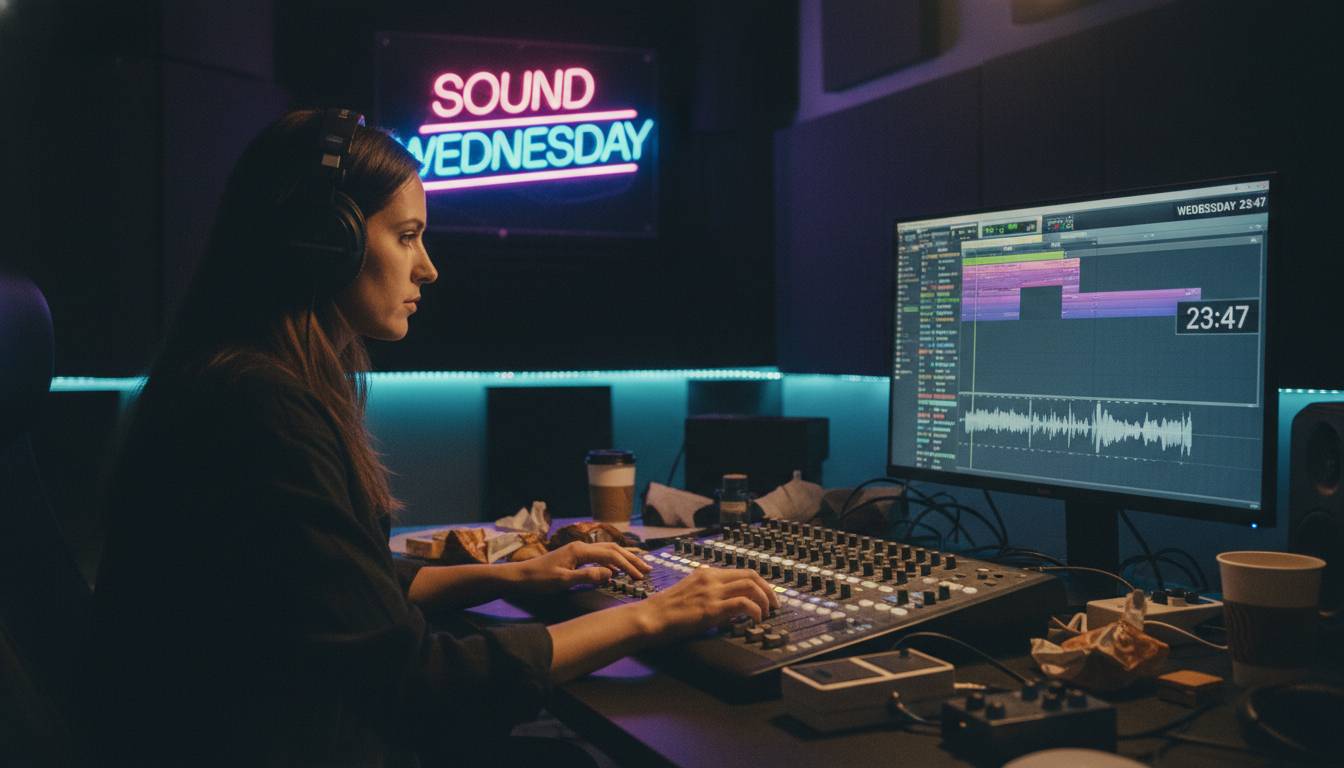
Netflix’s ‘Wednesday’ reached millions by blending gothic mystery, modern horror, and meticulous soundscapes crafted by John Loranger. According to Immersivemedia, Loranger managed sound for over six hours of new content in Season 2, developing six distinct versions for core monster scenes. Close feedback loops with director Tim Burton shaped each draft.
Trends in Television Sound Design
According to Immersivemedia, television sound design now rivals feature films in complexity as platforms like Netflix prioritise immersive worlds and narrative depth. The 2023 Sound Design Report cited key investments in original programming that necessitate richer auditory layers. In ‘Wednesday,’ this philosophy delivers distinct monster effects, nuanced environmental atmospheres, and textured background sounds—ranging from echoing footsteps to layered growls—that must bolster each scene without overpowering the story.
Keine Ergebnisse: Breaking Through Audio Challenges
When standard tracks missed the mark or lost suspense, sound editors like John Loranger faced creative setbacks requiring multiple iterations. Per Lorangersoundlab, Loranger crafted six new concepts for a single monster sequence, each one tested and revised based on detailed feedback from Tim Burton and the production team. The toughest challenge was matching atmospheric tension with unique monster voices—every creature needed custom vocalisations and environmental layers. Loranger’s ten years of experience with collaborators Miles and Al, beginning with 2016’s ‘Into the Badlands,’ made iterative problem-solving part of his core process for ‘Wednesday.’ The feedback cycle became a proving ground for creative persistence.
#= title #: Sonic Identity in ‘Wednesday’ Season 2
Nevermore’s acoustic world was shaped through repeated, meticulous revisions—not single takes. According to Immersivemedia, Loranger delivered six complete versions for pivotal scenes, with each one submitted to Burton and showrunner Miles Millar for vital analysis.
LET’S BUILD SOMETHING MEMORABLE: Collaboration with Creative Leadership
Close cooperation among sound editors, directors, and writers now forms the backbone of series like ‘Wednesday.’ According to Immersivemedia, Loranger’s decade-long partnership with Miles Millar and Al Gough—starting with ‘Into the Badlands’ (2016)—honed an iterative process centred on honest feedback. With Season 2, their system intensified: Loranger delivered multiple options per scene. Tim Burton and Millar scrutinised every detail, pushing for refinements across six official rounds on major sequences. Per Filmmusicreporter, industry-wide trends mirror this level of involvement, with studios prioritising multidisciplinary review cycles.
Staffel 2 (2025): Audio Evolution and Release Timeline
According to Themoviedb, ‘Wednesday’ Season 2 is scheduled for a 2025 release, with post-production teams delivering more than six hours of new material. Loranger’s notes reveal that feedback on initial monster effects came in early 2024, launching a series of revision rounds through the year as episodes approached final edit.
2024: Initial feedback round on monster audio sequences
Mid-2024: Up to six major revisions approved iteratively
Early 2025: Final audio lock for opening episodes
Late 2025: Expected global Netflix release for Season 2
John Loranger: Career, Craft, and Techniques
According to Lorangersoundlab, John Loranger’s sound editing career stretches over a decade, with benchmark work on action and supernatural series like ‘Into the Badlands’ (2016) and ‘Wednesday.’ He approaches each sequence as an experiment: for Season 2, no monster received an off-the-shelf solution, and audio was revised up to six times before final approval.
Filmmusicreporter details how ‘Wednesday’ has recalibrated expectations for sound in peak Netflix streaming shows, spotlighting Loranger’s workflow as a focal point for advancing audio professionals. In new interviews, he and his core team describe their approach—balancing efforts from composers, Foley experts, and sound designers using digital and acoustic techniques for richer effects. Over six hours of material (per Season 2 production schedules) were shaped by custom monster shrieks, ambient track design, and delicate mixing.
2024: Monster sound drafts delivered for review
Mid-2024: Rounds of revision and test screening start
Fall 2024: Sound lock achieved for primary episodes
Early 2025: Finalised audio mix for all content
Late 2025: Global public release with enhanced audio detail
Collaborative Creativity: The Feedback Loop in Practice
According to Immersivemedia, Loranger’s approach for ‘Wednesday’ Season 2 relied on a hyperactive feedback loop with Tim Burton and Miles Millar.
Distinctive Monster Audio: Crafting the Supernatural
As detailed by Immersivemedia, Loranger’s process for ‘Wednesday’ Season 2 demanded each monster receive a personalised audio fingerprint, often testing six alternate versions before settling.
The Role of Technology: New Tools, Old Challenges
Integration with Score and Foley: Teamwork in Post
According to Filmmusicreporter, the creation of ‘Wednesday’ Season 2’s sound palette required intense coordination between Loranger, dedicated composers, and Foley artists building custom effects.
Impact on Streaming Standards: Raising the Bar
According to Immersivemedia, Loranger’s multi-iteration model with six versions per pivotal sequence has become a reference point for Netflix and its competitors.
6 — Distinct sound versions per monster.
Audience Experience: Bringing Nevermore to Life
Per Themoviedb, Season 2’s new monster audio, layered atmospherics, and signature cues have deepened fan immersion. Carefully segmented soundscapes heighten viewer suspense and emotional response, making each first-time scare or hidden detail in Nevermore stand out. With sound now woven into the show’s visual identity, audience memories connect both sensory experiences, and many report that audio cues shaped how they interpreted key scenes.
Lessons for Future Projects: What ‘Wednesday’ Teaches Sound Editors
According to Filmmusicreporter, Loranger’s philosophy of relentless revision, collaborative risk, and open feedback is now seen as a template for new generations of sound editors. Producing six or more alternative takes on a single sequence and working closely with directors and producers through each cycle sets a new bar for diligence and quality.
According to Immersivemedia and Filmmusicreporter, the boundary-pushing sound editing on ‘Wednesday’ Season 2. Marked by six iterations per standout audio moment and more than six hours of reworked material—has set new norms for streaming projects.
For more about sound editing and the creative process behind leading series, visit More Behind the Sounds for additional expert features on television post-production.
This article is for informational purposes only. Always verify information independently before making any decisions.